Myths vs. Facts: Baby Teeth — Why "They'll Fall Out Anyway" Is the Most Expensive Dental Misconception

No phrase does more harm in pediatric dentistry than "they'll just fall out anyway." It's the reasoning behind delayed dental appointments, untreated cavities, and the dismissal of baby tooth concerns that have real, lasting consequences for a child's oral health. The myths about primary teeth are deeply embedded in how parents think about their children's dental care — and addressing them is one of the most important conversations a pediatric dental practice can have.
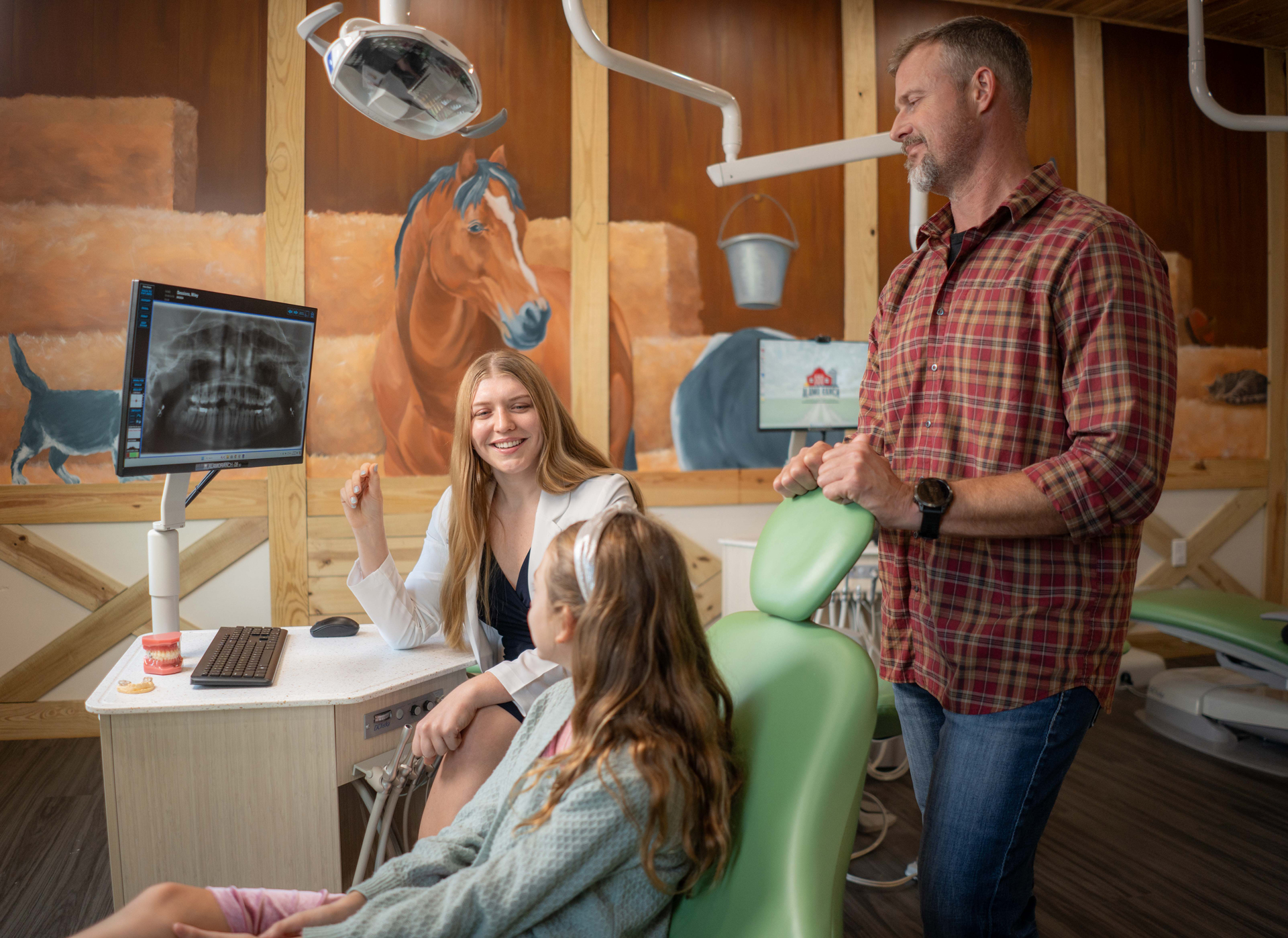
At Alamo Ranch Children's Dentistry & Braces in San Antonio, the farm-themed practice designed to make dental care a genuinely positive experience for children, this conversation shapes the practice's patient education at every appointment.
Myth: Baby Teeth Don't Need to Be Treated Because They're Temporary
Fact: Untreated cavities in baby teeth cause pain, infection, and damage to the permanent teeth beneath them.
Baby teeth are present in a child's mouth for years — the last primary molars typically don't fall out until age 10 to 12. A cavity in a 4-year-old's molar has six to eight years to cause pain, infection, damage to the permanent tooth bud beneath it, and the behavioral and developmental consequences that dental pain in children reliably produces.
Dental infections in children can spread to the jaw, the face, and — in severe cases — to adjacent spaces that pose genuine medical risk. These are not outcomes that happen rarely; they're the predictable progression of untreated decay that parents deferred because "it'll fall out."
Myth: Baby Teeth Don't Affect Permanent Teeth
Fact: Primary teeth are placeholders and guides for permanent teeth — damage to them directly affects the permanent teeth that follow.
Each baby tooth holds space for the permanent tooth developing beneath it. When a baby tooth is lost prematurely — through decay, trauma, or extraction — the adjacent teeth drift into the empty space. This drift closes the path that the permanent tooth needs to erupt into, causing the permanent tooth to emerge in the wrong position, rotated, or blocked entirely.
This is the reason space maintainers exist: to hold the space that a prematurely lost baby tooth was holding, so the permanent tooth can erupt into the correct position. The alternative — waiting to see what happens — often results in the kind of crowding that requires extensive orthodontic correction later.
Myth: Children Don't Need to See a Dentist Until They Have All Their Teeth
Fact: The American Academy of Pediatric Dentistry recommends a child's first dental visit by age 1 — or within six months of the first tooth erupting.
The first dental visit establishes a dental home, provides parents with specific guidance about infant oral hygiene, dietary habits, fluoride, and teething, and allows the team to identify any early development concerns before they become significant problems.
Children who begin dental visits in infancy develop a familiarity and comfort with the dental environment that children who begin at age 4 or 5 with established fear and anxiety don't have. The early visit is brief, low-key, and largely educational — but its effect on how a child approaches dental care for the rest of their life is significant.
Myth: Fluoride Isn't Safe for Young Children
Fact: Fluoride is one of the most well-established and widely studied cavity-prevention tools available — and is recommended by the American Dental Association, the American Academy of Pediatrics, and the AAPD.
Fluoride strengthens enamel and makes it more resistant to acid demineralization — the mechanism that produces cavities. At appropriate concentrations and delivery methods (community water fluoridation, fluoride toothpaste in age-appropriate amounts, professional fluoride treatments), it is both effective and safe.
Dental fluorosis — the mottling that occurs from excessive fluoride ingestion during tooth development — is associated with swallowing toothpaste in large quantities, not with professionally supervised fluoride treatments or community water at recommended levels. At Alamo Ranch Children's Dentistry & Braces, the team provides specific guidance on appropriate fluoride use for each child's age and risk level.
What Early Cavity Treatment in Baby Teeth Actually Involves
For parents who've decided to treat a cavity in a baby tooth — the right decision — the concern that usually follows is about what the appointment will look like. For small cavities caught early, treatment is often brief and straightforward: a small composite filling placed in a single appointment with topical anesthetic and a child-appropriate approach that keeps the experience manageable.
For larger cavities that have reached the nerve, a baby root canal (pulpotomy) may be needed — a procedure that removes the affected portion of the nerve and places a stainless steel crown to protect the tooth. This is considerably less intimidating in practice than it sounds: it's performed in the same visit as the initial evaluation in many cases, with the same local anesthetic protocol, and the child leaves with a tooth that will function normally until it's ready to naturally exfoliate.
The Alamo Ranch Children's Dentistry & Braces environment — farm-themed, with Disney+ in every treatment room, video game stations, and a team trained specifically for young patients — makes even treatment appointments something children can navigate with comfort and even enjoyment. The goal isn't just getting the procedure done. It's building the relationship with dental care that will serve the child for life.
Schedule Your Child's Appointment at Alamo Ranch Children's Dentistry & Braces
The farm-themed practice at 11203 Valley Meadow Road in San Antonio serves families in Alamo Ranch, Westover Hills, and the greater San Antonio area with the kind of care that makes dental visits something kids actually enjoy — TVs with Disney+ in every treatment room, video game stations, and a team that genuinely loves working with children. Call (210) 858-6460 to schedule your child's next visit. The baby teeth that are treated and protected today are the ones that do their job — holding space, supporting development, and guiding permanent teeth — all the way through.
The farm-themed environment, Disney+ in every treatment room, video game stations, and a team that genuinely loves children — these aren't decorations. They're the intentional design of a practice built around making dental care something kids look forward to, appointment after appointment.
