Shocking Things Sugar Is Doing to Your Child's Teeth — Beyond the Cavity

Here's a question most parents get wrong: how many times a day does your child's mouth come into contact with sugar?
The instinct is to count sweets — the cookie after lunch, the juice box, the birthday cupcake. But a realistic count includes cereal at breakfast (most popular children's cereals are 35-50% sugar by weight), the sports drink at soccer practice, the fruit snack in the backpack, the glass of chocolate milk with dinner, and the ketchup with everything in between. For many kids, the answer is closer to 12 to 15 acid exposures per day — and every single one is doing something specific and damaging to enamel that no amount of brushing afterward can fully reverse.
At Alamo Ranch Children's Dentistry & Braces, our team — including board-certified pediatric dentists Dr. Victoria Ramirez and Dr. Joanna Ayala, general dentist Dr. Alina Jafferbhoy, and board-certified orthodontists Dr. Abdullah Asser Mohammed and Dr. Dakota Miller — takes an honest, educational approach to the sugar conversation with every family. Not to lecture, but because understanding what's actually happening in the mouth changes the choices parents make. Here's what's actually happening.
The Acid Attack Cycle Every Parent Needs to Understand
When sugar enters the mouth, it isn't the sugar itself that damages teeth. The real villain is bacteria — specifically, the Streptococcus mutans bacteria that live in dental plaque. These bacteria feast on sugar and produce lactic acid as a byproduct. That acid then attacks the enamel surface of the tooth, beginning to dissolve the mineral structure in a process called demineralization.
Here's the shocking part: this acid attack lasts approximately 20 minutes after each sugar exposure ends. And saliva — the mouth's natural defense system — needs roughly 20 to 30 minutes to neutralize the acid and allow remineralization to begin.
So the child who sips a juice box over 45 minutes isn't exposing their teeth to one acid attack. They're extending a single acid attack across their entire sip session, never giving saliva a chance to recover. The child who snacks continuously throughout the afternoon isn't having a few small sugar exposures — they're living in a near-constant acid environment.
According to the Centers for Disease Control and Prevention, tooth decay is the most common chronic disease in children ages 6 to 11 in the United States — more common than asthma, diabetes, or hay fever. A significant driver of that statistic is the frequency, not just the quantity, of sugar exposure.
Why Baby Teeth Are Especially Vulnerable
Permanent teeth and baby teeth are not the same. Baby teeth have thinner enamel — the outer protective layer that shields the inner layers from bacteria and acid. That means the same acid attack that might take months to breach permanent enamel can progress through baby enamel significantly faster, producing cavities that go from "early stage" to "needs a crown" in a shorter timeframe.
This is one of the most common surprises parents encounter at checkups: cavities that appeared between appointments in teeth their child didn't seem to be hurting. It's not neglect — it's the biology of thinner enamel and the frequency of acid exposure combining to produce damage that outpaces a six-month appointment cycle.
The other common misconception worth addressing directly: baby teeth matter even though they eventually fall out. Baby teeth hold space for permanent teeth, guide jaw development, facilitate chewing and speech, and influence how adult teeth erupt. A cavity in a baby molar that requires extraction creates a chain reaction — the adjacent teeth drift, the permanent tooth below has nowhere to go, and what should have been a filling becomes an orthodontic problem.
The Drinks Are Often the Worst Offenders
Liquid sugar is more damaging than solid sugar in one specific way: it coats every surface of the teeth simultaneously and lingers in contact with enamel as long as the drink is being consumed. Solid foods are partially cleared by chewing and swallowing; drinks bathe the entire mouth in sugar and acid with every sip.
Juice — including 100% fruit juice — contains concentrations of naturally occurring sugars that can rival or exceed soda. A 6-ounce juice box may contain 15 to 20 grams of sugar, delivered in liquid form that coats every tooth surface from the first sip to the last. Sports drinks are similarly high in sugar and also highly acidic by formulation, combining the bacterial acid attack with direct acid erosion. Even milk, while nutritionally valuable, contains lactose that bacteria will metabolize — which is why the recommendation exists to avoid putting toddlers to bed with a milk bottle.
Practical guidance from the team at Alamo Ranch: water is the only drink that doesn't require recovery time. If juice or milk is part of the routine, having it with a meal rather than sipped throughout the day dramatically reduces the acid exposure frequency.
What Actually Prevents the Damage
The key insight from all of the above is that prevention is more about behavior patterns than brushing intensity. A child who brushes twice daily but sips juice all afternoon has a higher cavity risk than a child who brushes once but drinks only water between meals.
- Timing matters: Limit sugar exposure to mealtimes when possible, so the acid attacks are fewer and saliva can recover between meals.
- Sealants: Dental sealants fill the deep grooves in back molars where bacteria accumulate most aggressively. The team at Alamo Ranch can apply sealants quickly and comfortably — and they've been shown to reduce cavity risk in those teeth by up to 80%.
- Fluoride: Professional fluoride treatments strengthen enamel and help it resist acid attacks. They're a routine part of every checkup and make the enamel surface more resistant to decay between visits.
- Regular appointments: Six-month checkups allow the team to catch early demineralization — white spots on the enamel that signal decay is beginning — before it progresses to a cavity. Early-stage lesions can sometimes be reversed with fluoride; established cavities cannot.
Schedule Your Child's Appointment at Alamo Ranch Children's Dentistry & Braces
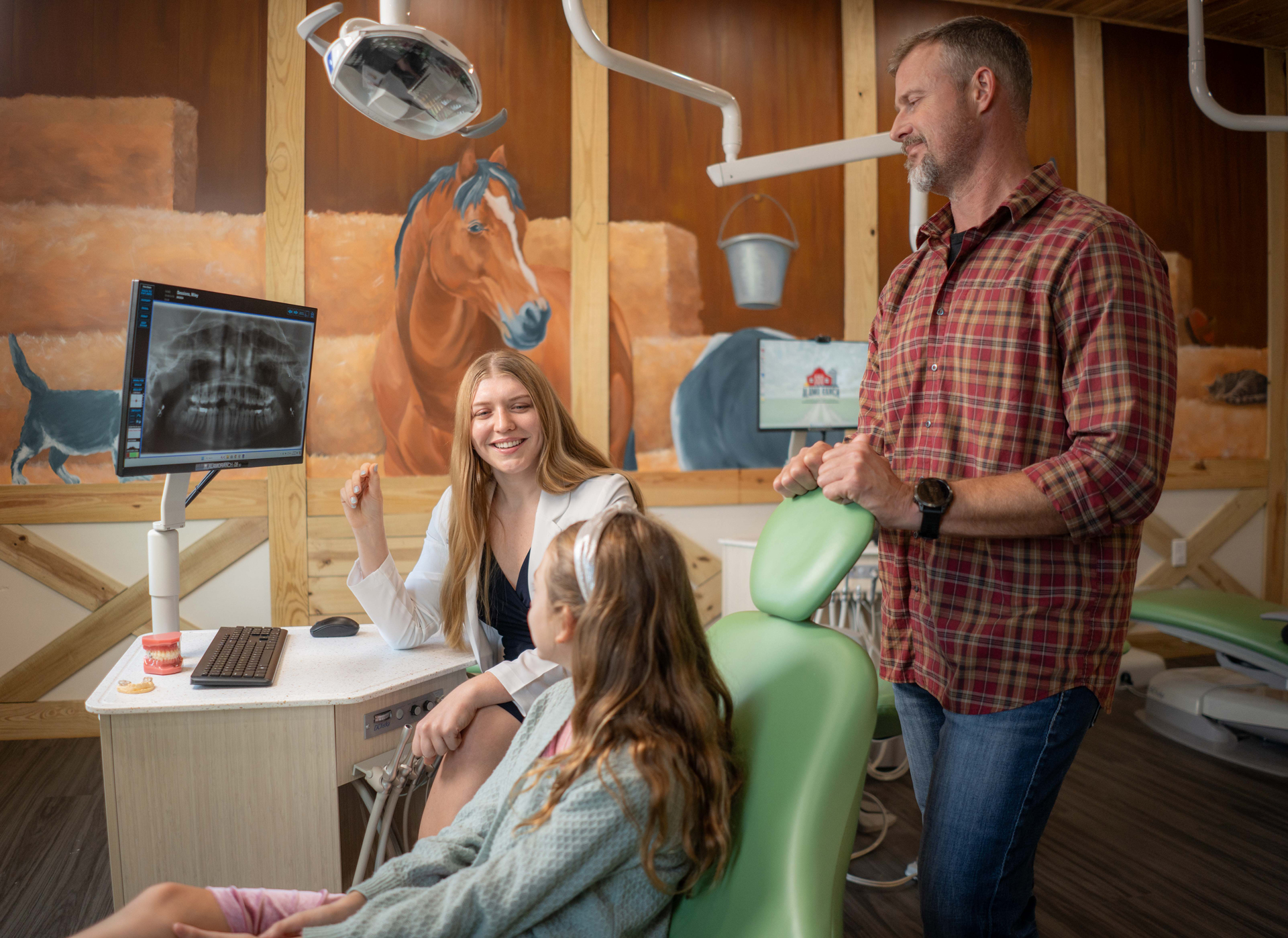
Our farm-themed practice at 11203 Valley Meadow Road in San Antonio — serving families in Alamo Ranch, Westover Hills, and the greater San Antonio area — is designed to make dental visits something kids actually enjoy. TVs with Disney+ in every treatment room, video game stations, and a team that genuinely loves working with children make the difference between an appointment kids dread and one they actually look forward to. Call (210) 858-6460 to schedule your child's next visit. The best time to talk about sugar's effects on your child's teeth is before the damage shows up — not after.
