
The Invisible Shield Most San Antonio Kids Don't Have on Their Teeth
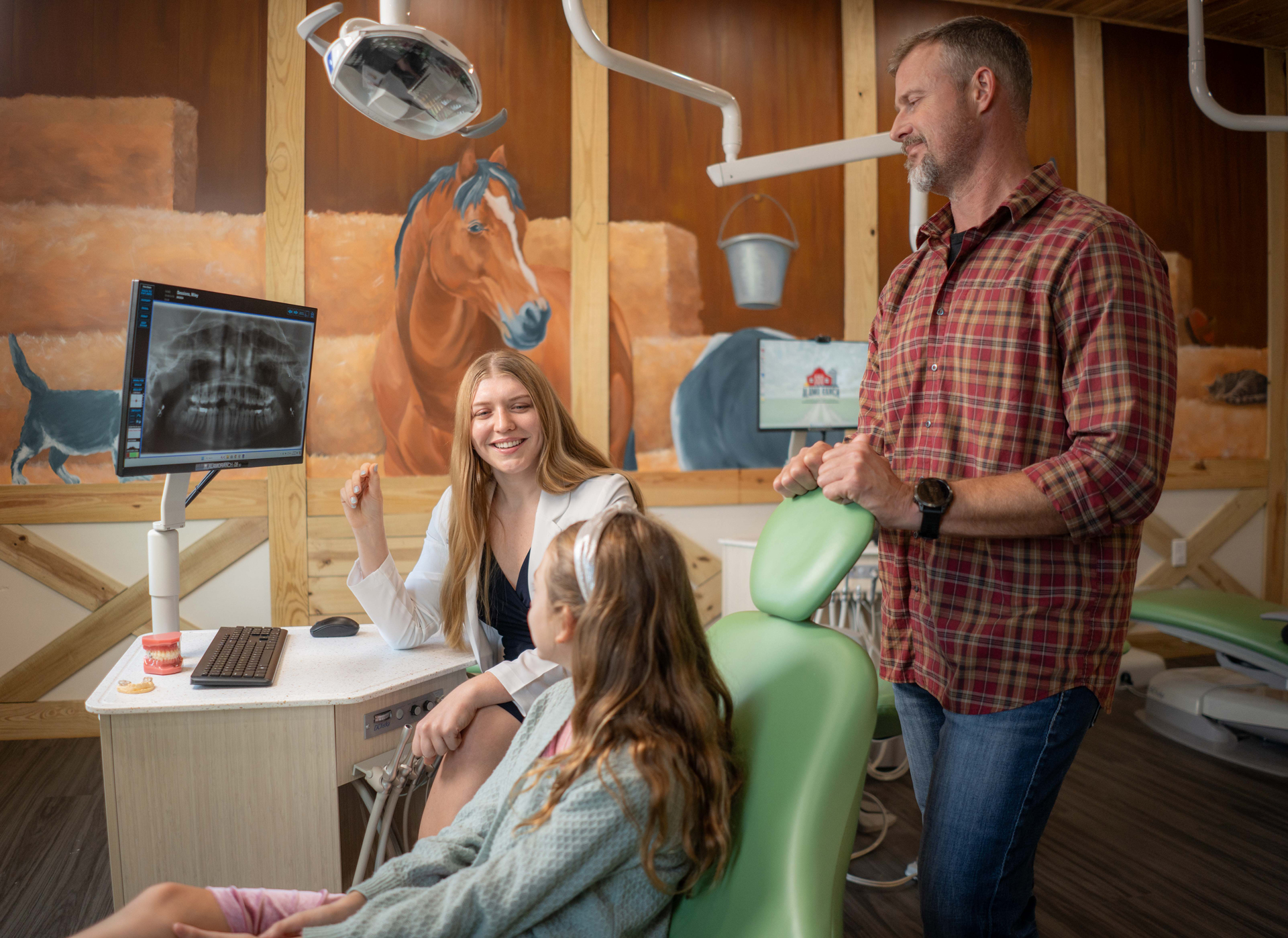

There's a specific moment in a pediatric dental appointment that happens more often than it should: a child who has been brushing regularly, eating reasonably well, and coming in for checkups develops a cavity in the deep groove of a back molar. The parents are confused. They did everything right. And the honest explanation from the dental team is that sometimes the anatomy of the tooth itself is working against even the most diligent brushing.
The back molars — the chewing workhorses of the mouth — have deep pits and fissures on their biting surfaces. These grooves are where the majority of childhood cavities form, and they form there for a simple reason: the bristles of a toothbrush are wider than the opening of the groove itself. Bacteria and food particles accumulate in places that literally cannot be reached. The result is decay that develops not from neglect but from anatomy.
Dental sealants exist specifically to address this problem. At Alamo Ranch Children's Dentistry & Braces on Valley Meadow Road in San Antonio, the team of board-certified pediatric dentists applies sealants as part of a comprehensive prevention strategy — one that works alongside brushing, flossing, and fluoride treatments to genuinely close the most common pathway for childhood tooth decay.
What Dental Sealants Are — and How They Work
A dental sealant is a thin, tooth-colored resin material applied to the chewing surfaces of the back teeth. The material flows into the pits and grooves of the molar surface, where it bonds and hardens to create a smooth, sealed surface. Bacteria no longer have a place to accumulate because the groove no longer exists.
The application is quick, comfortable, and requires no drilling or anesthesia. The tooth is cleaned, a mild conditioning solution is applied briefly to help the sealant bond, and the material is painted on and cured with a light. Total time for all four molars is typically under fifteen minutes. Children feel nothing during the procedure.
Once in place, sealants are protective for years — research consistently shows that sealed teeth have significantly lower rates of decay in the grooved surfaces compared to unsealed teeth. The American Academy of Pediatric Dentistry recommends sealants as a key preventive tool, particularly for children at elevated decay risk, though the evidence supports their use broadly.
The Timing Question — Why Summer Is Actually Ideal
The first permanent molars erupt around age six, and the second permanent molars around age twelve. Both represent windows when sealant application is most valuable — as soon as the tooth is fully erupted, before any decay has had a chance to establish itself.
Parents who schedule the summer dental checkup proactively rather than waiting until school schedules are packed in September have a practical advantage: if the exam reveals that a child's first or second permanent molars have erupted, sealants can be applied the same visit or at a follow-up before fall. The child enters the school year already protected.
It's worth noting that primary (baby) molars can also benefit from sealants in children with elevated decay risk, particularly those who have had previous cavities. Dr. Pina, Dr. Ramirez, and the Alamo Ranch team evaluate each child's individual risk profile and make sealant recommendations accordingly — not as a blanket protocol, but as a targeted tool applied where it provides genuine benefit.
What the Alamo Ranch Team Looks For During Sealant Evaluation
Dr. Victoria Ramirez, a graduate of The University of Texas Dental Branch at Houston, brings years of experience in a pediatric dental setting to her evaluation of every young patient's decay risk. Dr. Diana "Carol" Pina, a board-certified pediatric dentist who completed both her dental degree and specialty residencies at the UTHSCSA program, has developed particular expertise in diagnosing conditions that affect children's oral health, including oral ties that can influence how food is processed and retained.
During the summer checkup, the team assesses:
- Eruption status: Which permanent molars are fully erupted and ready for sealant application
- Surface condition: Sealants are applied to clean, unrestored enamel — not to surfaces with existing decay or restorations
- Groove depth and anatomy: Deep, narrow fissures benefit most from sealant protection
- Prior decay history: Children who have had cavities in primary teeth are at higher risk for future decay and benefit most from aggressive preventive measures
- Diet and hygiene habits: The full picture of a child's oral environment informs the recommendation
A Note on Fluoride and Sealants Working Together
Sealants and fluoride treatments address different aspects of decay prevention, and the two work well together. Fluoride strengthens the enamel itself — it incorporates into the mineral structure of the tooth and makes it more resistant to acid attack. Sealants physically block the sites where bacteria accumulate on grooved chewing surfaces.
A child who receives both fluoride treatment and sealants at their summer checkup has addressed the major vectors of childhood tooth decay in a single visit. This combination is exactly the kind of comprehensive preventive approach that the Alamo Ranch team prioritizes — building healthy oral habits and providing the clinical tools that support them.
Sealants and Dental Anxiety — The Combination That Works
One of the underappreciated advantages of sealant application is how smoothly it fits into the care pathway for children who experience dental anxiety. Because the procedure requires no drilling, no injections, and no discomfort, it is genuinely one of the most anxiety-neutral procedures in pediatric dentistry. For a child who has previously had a difficult dental experience, a visit where the most involved part of the appointment is a light shining on freshly applied material is an opportunity to reset the dental relationship in a positive direction.
The team at Alamo Ranch Children's Dentistry & Braces is specifically trained in pediatric behavior guidance and has access to sedation options — including laughing gas, oral sedation, and general anesthesia — for children who need additional support for more involved procedures. But for sealant appointments specifically, even anxious children typically find the experience entirely manageable. Parents often report that it's one of the few dental visits their child leaves without complaint.
Dr. Alina Jafferbhoy, who holds a Certificate in Public Health with a dental emphasis from A.T. Still University alongside her DMD and brings particular focus to creating positive first impressions with young patients, has noted that sealant visits often serve as confidence-building experiences for children who have been apprehensive about dental care.
Schedule Your Child's Summer Checkup at Alamo Ranch
Alamo Ranch Children's Dentistry & Braces is located at 11203 Valley Meadow Road in San Antonio, serving families throughout the Alamo Ranch, Helotes, Westover Hills, and surrounding northwest San Antonio communities. The practice sees patients Monday through Friday from 8am to 5pm, with Saturday appointments available by arrangement.
Call (210) 858-6460 or schedule online. A summer checkup is the right time to find out whether your child's newly erupted molars are ready for the protection that sealants provide — and to start the school year with one fewer dental concern on the list.
